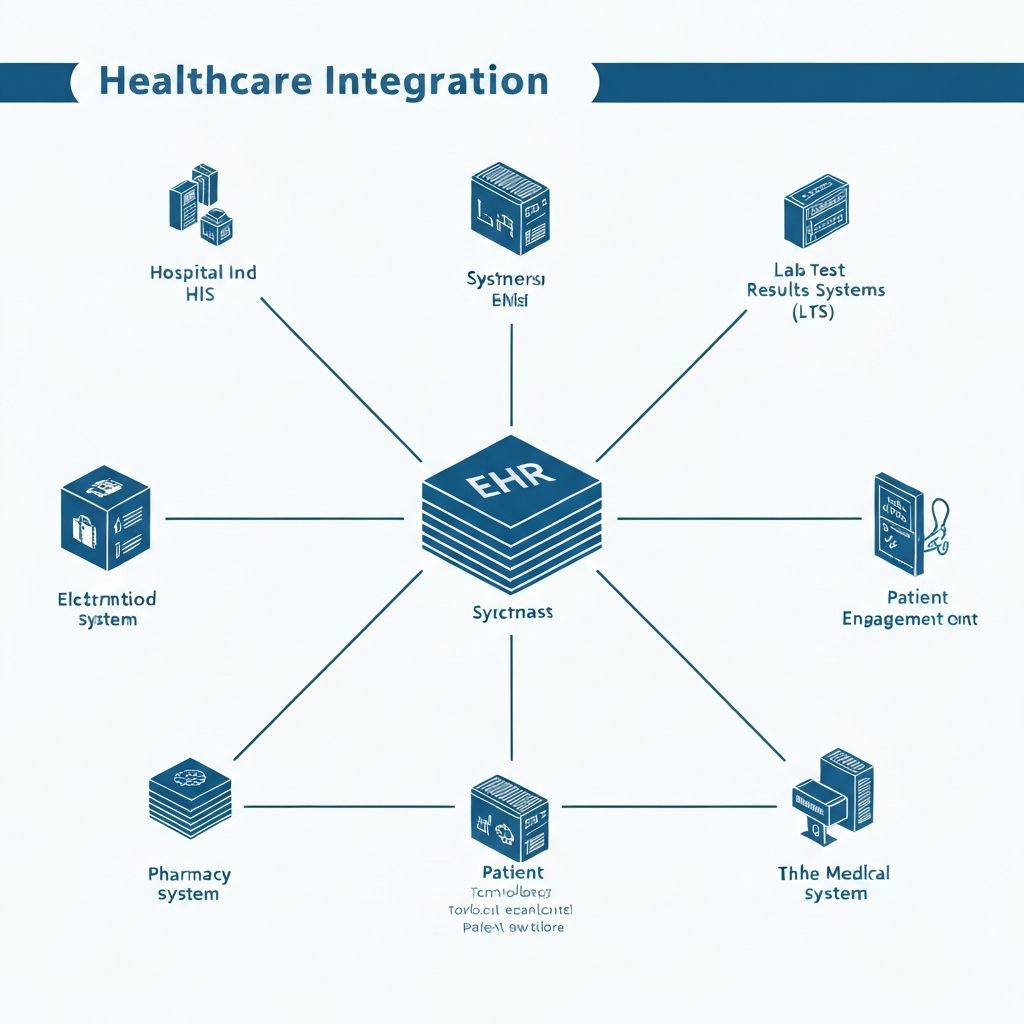
EHR integration is often cited as the biggest barrier to adopting new care management technology. While integration can be complex, understanding the process helps set realistic expectations and achieve better outcomes.
Why Integration Matters
Without EHR integration, your care team operates in two worlds—your RPM/CCM platform and your EHR. This means double documentation, missed information, and inefficient workflows. Good integration creates a unified experience where data flows seamlessly.
Types of Integration
Read-Only (Demographics Pull): The care management platform pulls patient demographics from the EHR. Simplest to implement but limited value.
Bidirectional ADT: Admission/Discharge/Transfer notifications flow between systems. Important for care transitions.
Clinical Data Sharing: Vitals, lab results, and other clinical data flow between systems. Enables meaningful care coordination.
Write-Back: Care management documentation flows back into the EHR. The holy grail—eliminates duplicate documentation.
SMART on FHIR Apps: The care management app launches from within the EHR interface. Seamless user experience.
Realistic Timelines
Integration timelines vary wildly based on your EHR vendor, your organization's IT resources, the complexity of integration desired, and whether interfaces already exist.
Simple demographic pulls might take 2-4 weeks. Full bidirectional integration with write-back can take 3-6 months or more. Plan accordingly.
Common Challenges
EHR Vendor Cooperation: Some EHRs are more open than others. Epic and Cerner have mature integration programs; smaller EHRs may require custom work.
IT Resource Constraints: Your IT team likely has a backlog. Getting prioritized takes relationship building.
Testing Complexity: Integration testing in healthcare requires PHI considerations and careful staging.
Ongoing Maintenance: Integrations break when either system updates. Plan for ongoing support.
Preparing for Success
Before starting an integration project, identify your IT stakeholder and build the relationship, document your current workflow and integration goals, understand your EHR's integration capabilities, and get executive sponsorship for the project.
The Staged Approach
Don't let perfect integration delay your program launch. Start with manual workflows or simple integrations. Get the program running and demonstrating value. Use that success to build momentum for deeper integration.
Many programs launch successfully with minimal integration, then add capability over time. Hoss-Kick supports organizations at every stage of the integration journey.